Why "Just Be Consistent" Is Incomplete Advice
The Problem with "Just Be Consistent"
When people say "just be consistent," what they usually mean is: do something every single day (or week) no matter what, for as long as it takes to see results. Stick to it. Don't break the streak. Discipline over everything.
And sure, there's some truth there. Showing up regularly matters. But this advice misses something crucial:
It doesn't account for well-being, sustainability, adaptability, or the minimum effective dose.
When we obsess over consistency without factoring in these other components, we end up:
Burning out because we're doing more than necessary
Forcing ourselves to show up when our bodies or minds are screaming for rest
Creating rigid standards and expectations that can't bend when life changes
Missing opportunities to evolve because we're too attached to "the way we've always done it"
Consistency without these considerations isn't sustainable. It's just another form of hustle culture.
What If We Asked a Different Question?
Instead of "How do I stay consistent?" what if we asked:
"What's the minimum effective dose required to get the result I want?"
This shifts everything.
The minimum effective dose is the smallest amount of effort that produces the desired outcome. It's not about doing the bare minimum out of laziness—it's about doing exactly what's needed and no more.
This concept comes from medicine and fitness, but it applies beautifully to business, creativity, and life.
For example:
If your intention is to grow your YouTube channel, maybe the minimum effective dose is a quick 5 minute tutorial once per week—not a 30-hour production that sucks the life out of you.
If your intention is to stay visible on Pinterest, maybe it's pinning one screenshot of some part of your website, sales page, or product each day—not spending hours designing custom graphics.
If your intention is to maintain your fitness, maybe it's a 15-minute workout and sporadic jumps on your rebounder—not forcing yourself through hour-long workouts when you're exhausted.
The magic isn't in "sticking to it no matter what." The magic is in making it so easy that you can't NOT do it.
The Real Components of Sustainable Action
When we move beyond consistency as the sole focus, we can build systems that actually work for real life. Here's what matters more:
1. Well-Being
Your actions should support your overall well-being, not destroy it. If "staying consistent" means sacrificing sleep, ignoring your body's signals, or pushing through when you need rest, you're not building something sustainable—you're building toward collapse.
Ask: Does this action nourish my energy, or deplete it?
2. Sustainability
Can you maintain this pace for the long term? Or are you relying on willpower and adrenaline that will eventually run out?
Sustainability means designing your business and life around what you can actually maintain without constantly white-knuckling it.
Ask: Can I see myself doing this a year from now without resentment?
3. Adaptability
Life changes. Your energy changes. Your business evolves. Your priorities shift. A system that requires perfect consistency in order to work is a brittle system.
The goal isn't to do the same thing forever. It's to create a framework flexible enough to adapt when circumstances change.
Ask: If I need to adjust this, can I do so without feeling like I've failed?
4. Minimum Effective Dose
This is where the real magic happens. When you identify the smallest action that produces results, you remove all the excess effort that was just making you tired.
You're not cutting corners—you're getting strategic about your energy.
Ask: What's the least I can do and still get the outcome I want?
The Bottom Line
It's not about consistency. It's about creating systems so aligned with your well-being and so easy to maintain that showing up feels natural, not forced.
You don't need more self-discipline—you need systems that enable less friction and more self-devotion.
Ready to say yes to self-honoring systems?
Join Sacred Systems
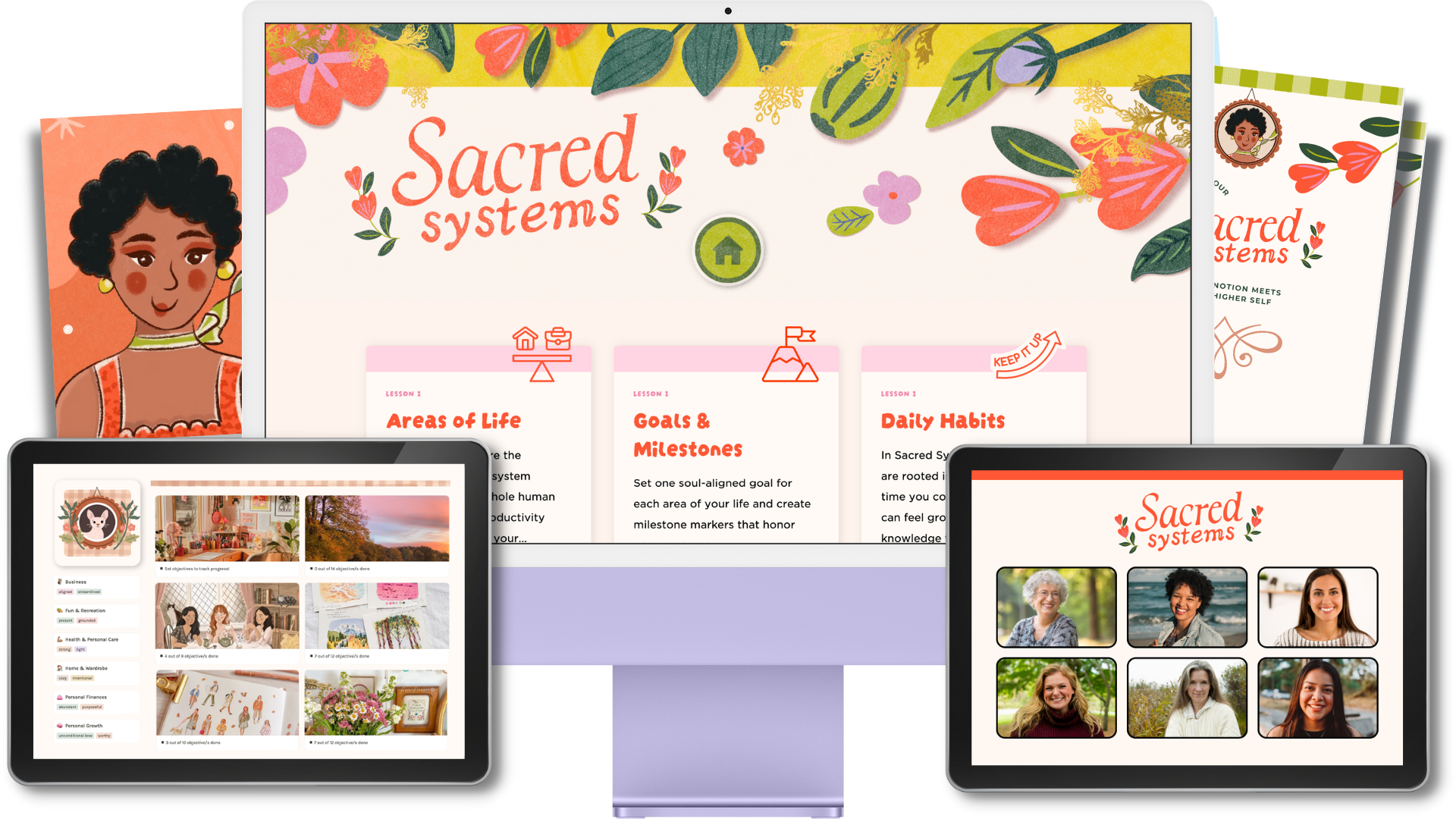
“This program is just brilliant! I have wanted to learn how to use Notion properly for several years. I have taken courses, watched videos, and read up on how to use it. But it just didn’t click - until Michelle’s Sacred Systems program.
I think it is because she teaches Notion as I will use it - and how most of us will use it. She explains things really well, and she shows examples and talks through them.
I can honestly say I am a Notion user now due to Sacred Systems! But more importantly - the whole program is just amazing. I now have my life far more organized, I don’t waste time trying to find where I have things stored or noted, and I use it for both my personal and business life. It is not an exaggeration to say that this course will really change your life.”